
Find your CellarScience yeast
Filter by style, temperature and character, or tell us what you normally use.
Search any yeast from another brand and we will show the closest CellarScience match.
0 selected
Compare strains
1
pack
If you’ve ever stood in front of a fridge full of yeast packets, scratching your head and wondering which one is right for your brew, you’re not alone. With so many strains to choose from—often at wildly different prices—it’s tough to know what offers the best value and the best flavour.
That’s where CellarScience yeast comes in. It’s a high-performing range that’s often significantly cheaper than the big-name brands, without sacrificing quality.
This guide breaks down the full CellarScience lineup, showing how each strain compares to popular commercial yeasts, what styles it suits, and the flavour profile you can expect.
Use our handy CellarScience selection tool below or keep scrolling for the full breakdown.
Whether you’re brewing a crisp lager, a hazy IPA, or a Belgian-style ale, there’s a CellarScience strain that fits the bill—and your budget. And the best thing? We stock it right here.
A Quick Look at Each Strain
Below is a handy table that summarises the core details for each CellarScience strain—what it’s good for, how it behaves, and where it comes from.
| Cellar Science Strain | Best For | Key Traits | Parent Strain |
|---|---|---|---|
| HAZY | NEIPAs, English Ales, IPAs, Stouts | Pineapple, red grape notes, smooth mouthfeel | White Labs London Fog WLP066 |
| CALI | American Pale Ales, IPAs, Blonde Ales, Porters | Clean finish, low diacetyl, crisp character | Fermentis SafAle US-05 |
| BAJA | Mexican lagers, Vienna lagers, other light lagers | Crisp, clean, easy-drinking | White Labs Mexican Lager WLP940 |
| VOSS | Pale Ales, IPAs, Stouts (wide temp range) | Orange citrus notes, fast fermenting, temp tolerant | Kviek Voss |
| GERMAN | Pilsners, Märzen, Bocks, classic lagers | Balanced and floral, subtly fruity | Fermentis SafLager W34-70 |
| NECTAR | Hoppy IPAs, Pale Ales, juicy beer styles | Intensely fruity, fast fermenting, high attenuation | Unique |
| KÖLSCH | Kölsch, Altbier, Belgian wits, session ales | Clean and dry, with gentle fruity notes | Fermentis SafLager K-97 |
| MONK | Belgian darks, strong ales, Trappist styles | Malty and rich, dried fruit character, temp flexible | Wyeast Belgian Abbey II 1762 |
| BERLIN | Märzen, California Commons, fruity lagers | Highly estery, good flocculation, high attenuation | Fermentis SafLager S-23 |
| ACID | Berliner Weisse, Gose, Lambic-style sours | Tart, red apple and peach notes, lactic acid production | Lallemand WildBrew Philly Sour |
| SAISON | Farmhouse ales, Saisons, Belgian-style beers | Dry, spicy, peppery, expressive fermentation | Wyeast French Saison 3711 |
| ENGLISH | English and American ales, pale and hoppy styles | Floral and fruity, fast fermentation, great flocculation | Fermentis SafAle S-04 |
| HORNINDAL | NEIPAs, Stouts, Pale Ales, Porters | Tropical, juicy, ferments hot and fast | Kviek Hornindal |
What Yeast Suits Your Brew?
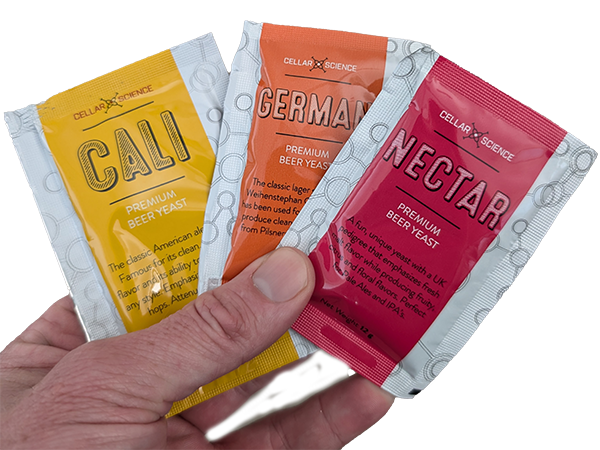
Let’s dig into the practical side—matching strains to the kind of beer you’re making and the flavour you’re chasing.
Crisp Lagers – Easy Drinkers for Hot Aussie Days
If you’re brewing a summer thirst-quencher:
- BAJA: Ideal for Mexican-style or Vienna lagers. Expect a super-clean, crisp profile and excellent drinkability.
- GERMAN: Suits classic pilsners and Märzen. It offers a balanced, slightly floral finish that lager lovers will appreciate.
Hazy & Hoppy Ales – Big Flavour, Soft Finish
For those juicy, modern IPAs:
- HAZY: Soft mouthfeel and subtle fruit esters (pineapple, grape). Great for hazy beers that need a smooth, pillowy base.
- NECTAR: Bursting with fruitiness and designed for hops to shine. It ferments fast and finishes dry.
English & Aussie Pub-Style Ales
Want something malty, balanced, and approachable?
- CALI: A clean American yeast that’s neutral and lets your hops or malt shine without distraction.
- ENGLISH: Perfect for traditional ales—fruity, floral, and highly flocculant, making for bright, clear beer.
Sours & Saisons – For the Adventurous Brewer
If you like brewing outside the box:
- ACID: Unique among these strains—it ferments and produces lactic acid, giving you a sour beer with minimal fuss.
- SAISON: If you’re into spicy, dry farmhouse ales, this one delivers peppery character and finishes bone dry.
Fast Ferments – Low Patience? No Problem
If you want your beer done quickly (and still tasting great):
- VOSS and HORNINDAL: Both are Kviek strains, known for quick fermentation and tropical fruit notes. They thrive in warm conditions, making them ideal for Australian garages and sheds.
Picking the Right Yeast: Three Things to Consider
Before you grab a packet off the shelf, ask yourself:
- What style am I brewing?
Use a strain suited to that specific style for best results. - Do I want yeast character or a clean profile?
If you want the yeast to contribute flavour, go with expressive strains like NECTAR or MONK. If you’d prefer it to stay in the background, try CALI or BAJA. - How fast do I want this done?
If you’re in a rush or brewing without temperature control, Kviek strains are your best mates.
A Few Tips
- Yeast Storage: Most of these yeasts are pretty forgiving, but keep them cool and dry where possible.
- Fermenting in Aussie Conditions: Don’t have a fermentation fridge? Kviek strains like VOSS or HORNINDAL thrive in warmer ambient temps, so they’re a great choice for hot climates.
- Where to Buy: CellarScience yeasts are available in our store here.
Final Thoughts
The yeast you choose has a huge impact on your final beer. While hops and malt get most of the attention, it’s the yeast that quietly transforms your wort into something worth drinking.
Whether you’re after a clean, crisp lager or a juicy, fruit-forward hazy IPA, CellarScience has a strain that can help you get there. With a bit of experimentation, you’ll start to understand what each yeast brings to the table—and how to make it work for your brewing style.
Happy fermenting!


